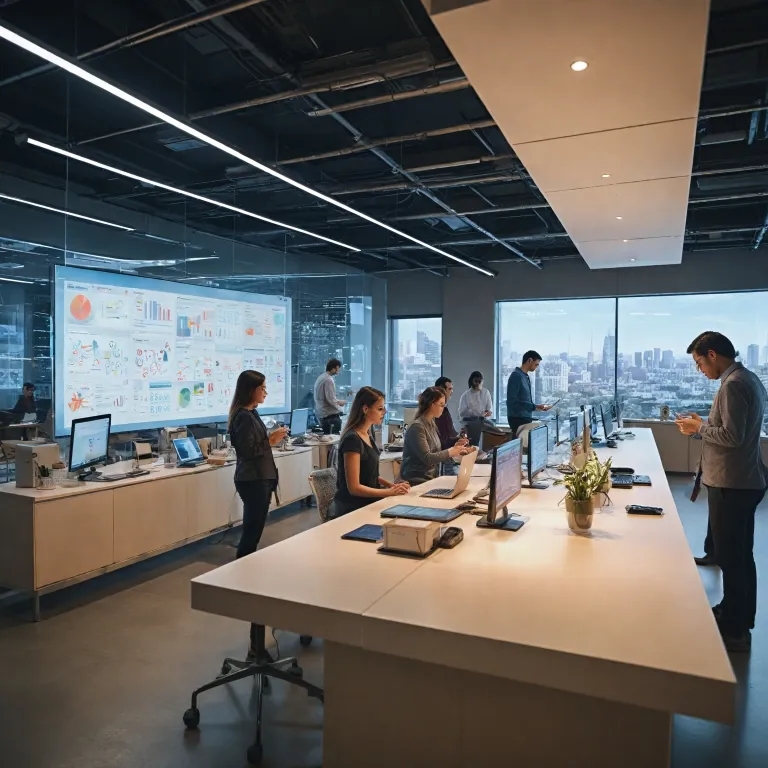
Understanding the retail digital workplace
The shift to digital workplaces in retail
The retail industry is experiencing a major digital transformation, changing how employees work and how retailers manage their teams. Digital workplaces are now central to store operations, connecting retail employees, management, and store teams through digital tools and platforms. These solutions enable real-time communication, collaboration, and task management, making it easier for team members to stay informed and aligned across multiple locations.
Retailers are adopting workplace solutions that help employees access information, manage schedules, and communicate with colleagues, whether they are on the sales floor or working remotely. This shift is not just about technology; it’s about improving the employee experience and supporting better business outcomes. Digital tools empower retail employees to make faster decisions, respond to customer needs, and collaborate more effectively, which ultimately enhances the customer experience in stores.
- Enhanced communication: Digital workplaces break down barriers between teams, allowing for seamless communication and collaboration in real time.
- Efficient task management: Employees can use digital tools to track tasks, share updates, and manage workloads, improving productivity and reducing errors.
- Flexible work environments: The rise of remote work and mobile access means that retail employees can stay connected and productive from anywhere, not just in the store.
As digital workplaces become the norm, retailers are rethinking how they use data to support their workforce. This includes everything from optimizing workforce scheduling to leveraging analytics for employee engagement and talent management. The integration of digital tools is also influencing real estate decisions, as retailers consider how to design workplaces that support both in-store and remote teams.
For a deeper look at what makes a workplace truly intelligent and how these changes are shaping the future of work, explore this insightful analysis of intelligent workplace trends.
Key HR analytics challenges in retail environments
Complexity of Retail Workplaces and Data Collection
The retail industry is unique in its fast-paced, customer-facing environment. Store teams are often dispersed across multiple locations, and employees work in shifts, making it challenging to gather consistent HR data. Digital workplaces have introduced new tools for communication and collaboration, but integrating these tools with HR analytics systems is not always straightforward. Retailers must ensure that data from digital tools, such as task management apps or scheduling platforms, is accurate and up-to-date. Inaccurate or incomplete data can lead to poor decision making and missed business outcomes.
Real-Time Analytics and Workforce Management
Retailers need real-time insights to manage their workforce effectively. However, capturing and analyzing data in real time across multiple stores and teams is a significant challenge. Digital transformation initiatives have enabled better data flow, but the volume and variety of information can overwhelm traditional HR systems. Retailers must invest in workplace solutions that can process large amounts of data quickly, supporting timely decisions about employee scheduling, task management, and customer experience improvements.
Balancing Employee Experience and Business Needs
One of the main challenges in retail HR analytics is balancing the needs of the business with the employee experience. Retail employees expect flexibility, clear communication, and opportunities for growth. At the same time, retailers must optimize staffing levels and control labor costs. Digital workplaces can help bridge this gap, but only if analytics are used thoughtfully. For example, using data to improve communication collaboration between store teams can boost engagement, but over-monitoring can harm trust and morale.
Data Silos and Integration Issues
Many retailers struggle with data silos, where information about employees, scheduling, and performance is stored in separate systems. This fragmentation makes it difficult to get a complete view of the workforce. Integrating digital tools and HR analytics platforms is essential for effective management, but it requires careful planning and investment. Without integration, retailers risk missing out on valuable insights that could enhance both employee engagement and customer experience.
Compliance, Privacy, and Ethical Use
Retailers must also navigate complex regulations around employee data privacy and ethical use. As digital workplaces collect more information about employees, ensuring compliance with data protection laws becomes more challenging. Retailers need clear policies and transparent communication to build trust with their teams while using analytics to drive business outcomes.
For a deeper look at how account analysis is transforming HR decision making in retail, check out this in-depth resource on account analysis in HR.
Leveraging data for employee engagement
Driving Employee Engagement with Real-Time Insights
In the retail industry, employee engagement is a critical factor for both business outcomes and customer experience. Digital workplaces are changing how retailers approach engagement by providing real-time data and advanced analytics. These digital tools help management teams understand what motivates retail employees, how they collaborate, and where improvements can be made in the workplace solution.
- Data-driven decision making: With digital transformation, retailers can collect and analyze data from multiple sources, such as communication platforms, task management tools, and workforce scheduling systems. This enables more informed decisions that directly impact employee experience and engagement.
- Enhanced communication and collaboration: Digital workplaces foster better communication collaboration among store teams and remote work employees. By tracking how teams interact, retailers can identify gaps in communication and implement strategies to strengthen team members’ connections.
- Personalized employee experience: Analytics allow for tailored approaches to employee engagement. For example, data can reveal which digital tools are most effective for different roles, helping to create a more supportive and productive work environment for all retail employees.
Retailers leveraging these insights can quickly adapt their management strategies to improve engagement and retention. Real-time analytics also support ongoing feedback, making it easier for employees to share their experiences and for leaders to respond proactively.
For a deeper look at how business process automation and analytics are transforming HR in retail, check out this article on business process automation consulting in HR analytics.
Optimizing workforce scheduling with analytics
Smarter Scheduling for Store Teams
Retailers face constant pressure to balance customer experience with operational efficiency. In the digital workplace, workforce scheduling is no longer just about filling shifts. It’s about using real time data and digital tools to match the right employees to the right tasks, at the right time. This approach helps store teams deliver better service and supports business outcomes. Digital transformation in the retail industry has introduced workplace solutions that collect and analyze data from multiple sources. These include employee availability, sales forecasts, foot traffic, and even weather patterns. By leveraging these insights, management can make informed decisions that improve both employee experience and customer satisfaction.- Data-driven scheduling: Digital workplaces use analytics to predict busy periods, ensuring enough team members are present to handle customer needs without overstaffing.
- Improved communication and collaboration: Digital tools allow employees to swap shifts, request time off, and communicate with managers in real time, reducing scheduling conflicts and improving morale.
- Task management: With digital workplace solutions, managers can assign tasks based on employee strengths and availability, optimizing productivity across store teams.
Predictive analytics for talent management
Anticipating Workforce Needs with Predictive Insights
Predictive analytics is reshaping how retailers approach talent management. By analyzing large volumes of workforce data from digital workplaces, retailers can forecast staffing needs, identify skill gaps, and anticipate turnover risks. This proactive approach helps store teams and HR leaders make informed decisions that align with business goals and customer expectations. Retailers are increasingly using digital tools to collect real time data on employee performance, attendance, and engagement. This data-driven approach enables management to:- Spot trends in employee turnover before they impact store operations
- Identify which teams or locations may need additional training or support
- Forecast seasonal workforce requirements based on historical data and current trends
- Match employee skills with evolving business needs, supporting internal mobility
Ensuring data privacy and ethical use of HR analytics
Building Trust Through Responsible Data Practices
The digital transformation in the retail industry has brought a surge in data collection and analytics. With digital workplaces and advanced tools, retailers can now gather real-time insights about employee engagement, workforce scheduling, and task management. However, as more data is collected from store teams, remote work platforms, and communication collaboration tools, ensuring privacy and ethical use becomes a top priority. Retailers must balance the benefits of data-driven decision making with the responsibility to protect employee privacy. Employees expect their personal information and work-related data to be handled with care. This is especially important in environments where digital tools track everything from shift patterns to communication habits.- Transparency: Clearly communicate to employees what data is being collected, how it will be used, and who will have access. This builds trust and helps team members feel secure in digital workplaces.
- Data Minimization: Collect only the data necessary for improving business outcomes, employee experience, and customer experience. Avoid gathering excessive information that does not directly support workplace solutions or management goals.
- Access Controls: Limit access to sensitive data to only those who need it for legitimate business purposes. This reduces the risk of misuse or accidental exposure.
- Compliance: Stay up to date with regulations like GDPR or CCPA, which set standards for data privacy and protection. Retailers operating across regions must ensure compliance in every store and digital workplace.
- Ethical Use: Use analytics to support employees, not to monitor or penalize them unfairly. Analytics should enhance the employee experience, improve communication, and foster collaboration, not create a culture of surveillance.
